
dblFeature · Product lifecycle management
Product lifecycle management, from ideation through to retirement
The whole product record run as a lifecycle, from ideation to retirement, with controlled approvals and versioned revisions. Design the packaging, configure the pallet and plan container loads on the same record.
Works on its own, and shares users and records with other dblSuite applications
Guest access: invite outside parties to provide documents at arm’s length
Used in manufacturing
How dblFeature works
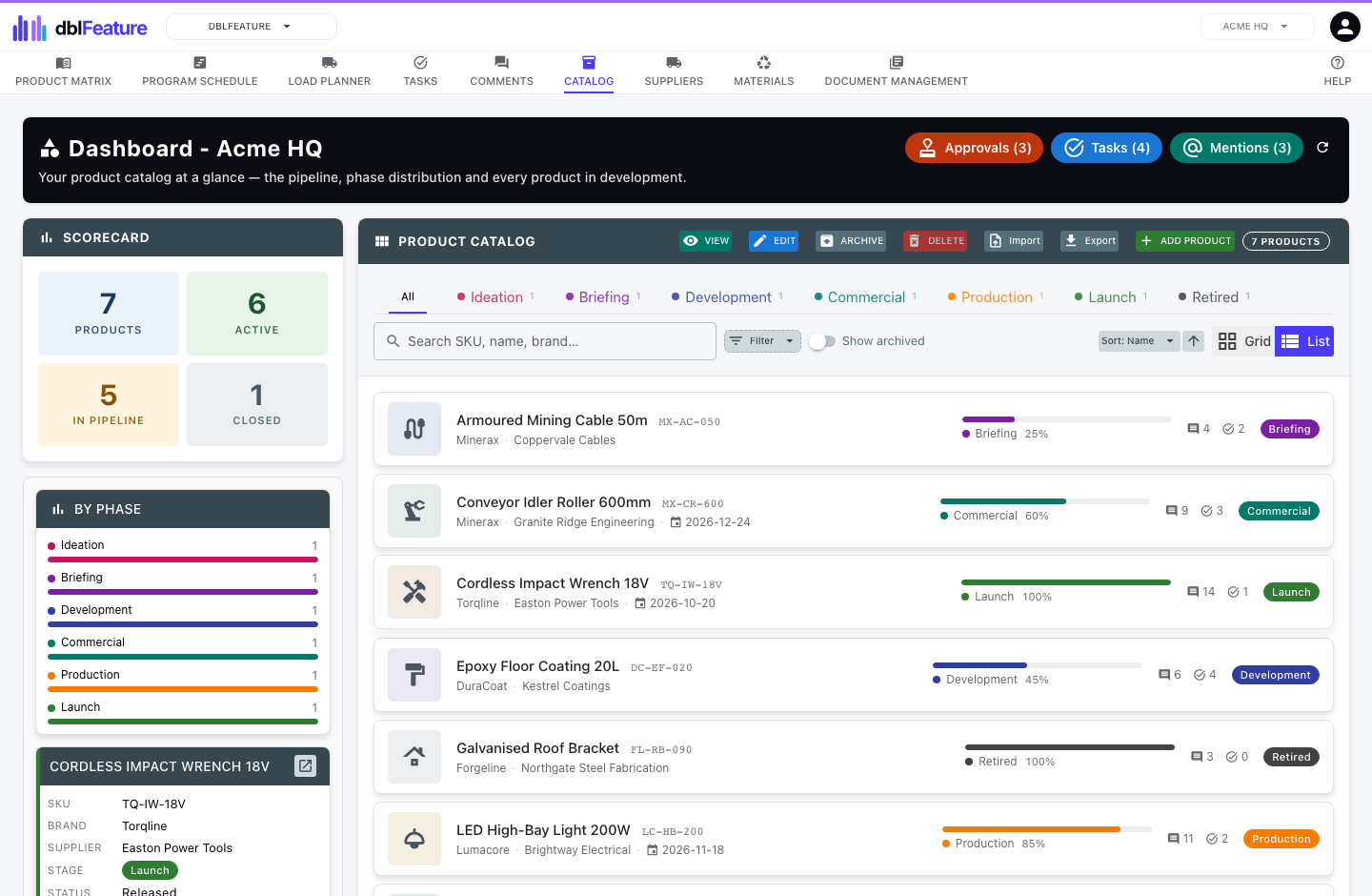
dblFeature holds the product record and runs it as a lifecycle. Products move through stages you define, seven as standard from ideation and briefing to design, packaging, commercialisation, production and launch, and break down into variants, revisions, components and assessments along the way. A withdrawn product is set to Retired and its whole record stays readable.
Stage gates are what make the lifecycle mean something. Each stage carries the documents it requires, set up once as a template and applied to every product. Advancing a product lists any required document still outstanding, and nothing becomes the design of record until every required document on that revision is done: approved where it has approvers, marked complete where it does not. Only an administrator can override that. Every revision is versioned, so you always know what changed, when and by whom. Each variant carries its own recommended retail price and shelf life, and the price can link to a dblDigit pricing scenario.
Packaging is specified here too, not bolted on afterwards. A packaging specification carries its own versions, approvers and comments, and draws on a reusable materials library that records the material, recycle code and certification of every component. Work out the carton build and pallet configuration, plan container loads for one product or a mixed shipment, see the pack in 3D, and export the load plan or the specification sheet. Invite suppliers and partners to work on just the records that concern them.
Try the packaging engine on one of your products with the free carton and pallet calculator.
In the application
A closer look at dblFeature
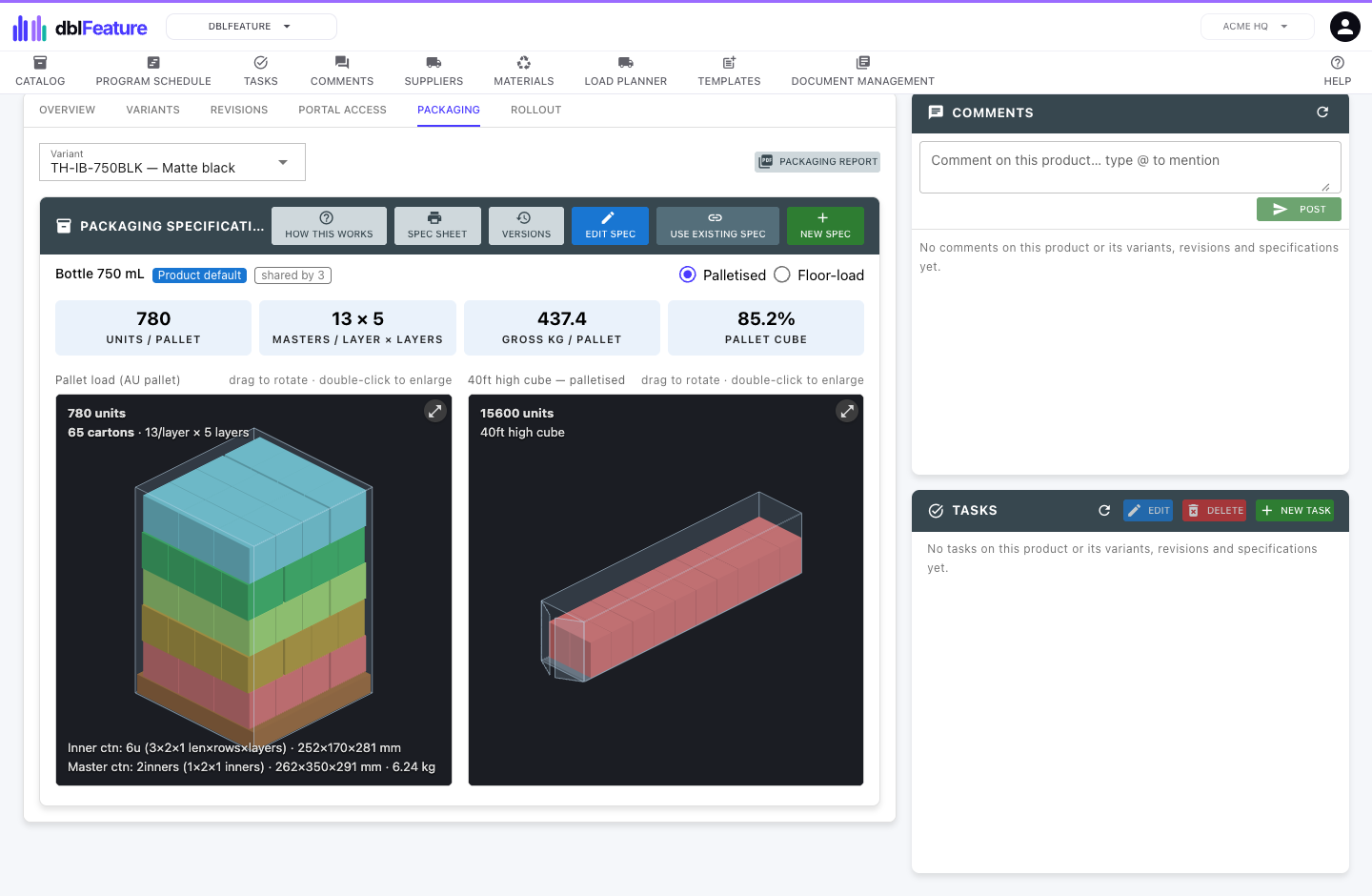
Packaging and palletisation
Work out how many units go in each carton and how the cartons stack on the pallet, then see the pallet and the container load in 3D.
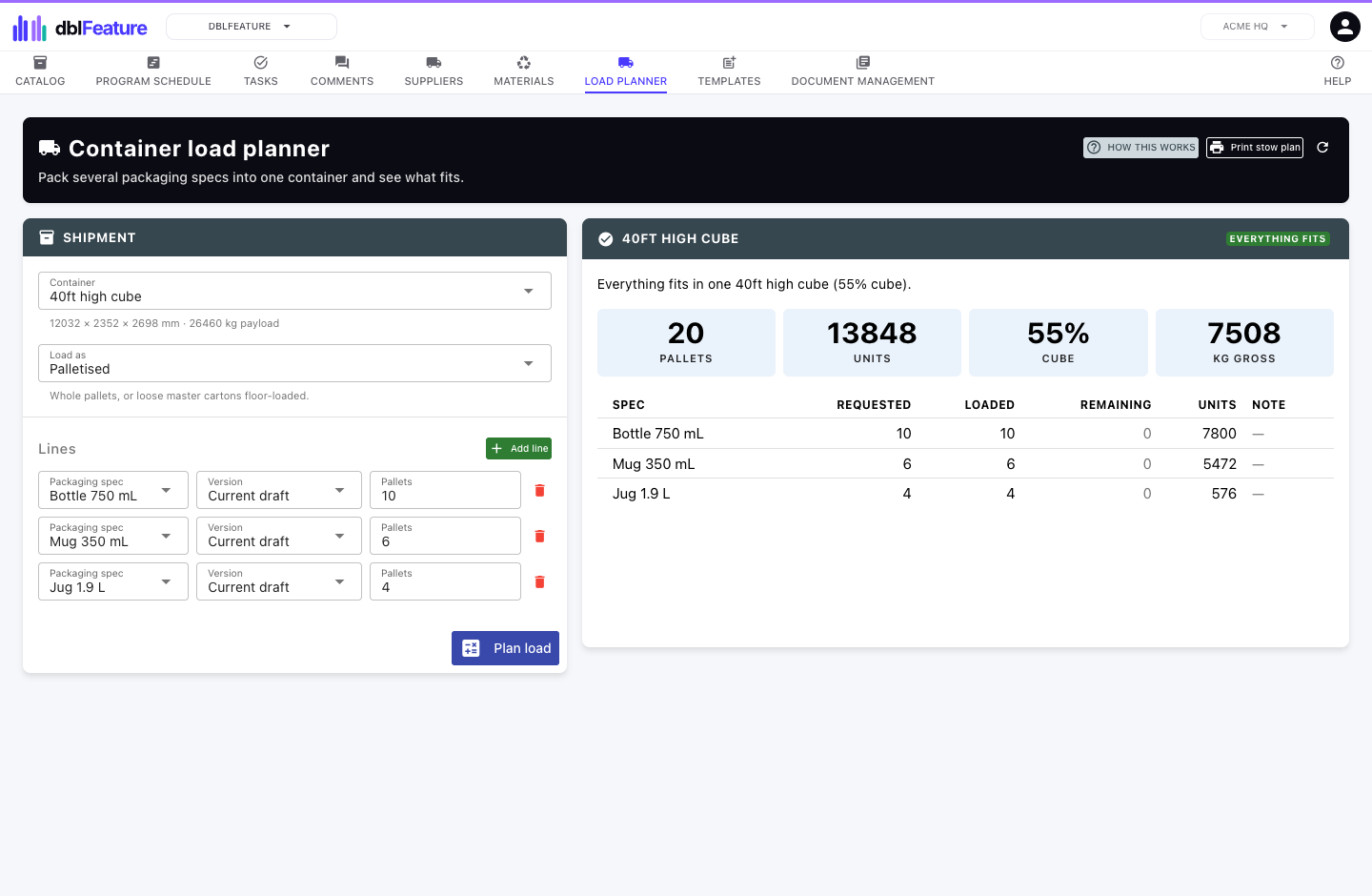
Load planning
Plan a shipment of several products into one container and see what fits before you book it.
Features
Lifecycle, specification and packaging features
- Product stages you define, seven as standard from ideation to launch
- No revision becomes the design of record until every required document is done
- Product, variant, revision and component structure
- Controlled specification approvals with versioned revision history
- Packaging specifications with their own versions, approvals and comments
- Reusable materials library with material, recycle code and certification
- Packaging design and pallet configuration with a 3D view of the pallet and container
- Container load planning for several products in one shipment
- Recommended retail price and shelf life on each variant, with the price linkable to a dblDigit pricing scenario
- Access for outside collaborators
Better together
How dblFeature works with other applications
dblFeature works on its own, and its records link to other dblSuite applications. The application that owns a record stays its system of record. The others point to it and show its current name and status.
Each component names its supplier, linked to that supplier's dblSource record.
dblDigit prices these products and their variants, and pulls freight figures from the latest approved packaging specification. A variant's recommended retail price can link to a dblDigit pricing scenario.
Warehouse items link to the product variants defined here, which fill in their codes, shelf life and pack sizes, so stock is always tied to the real product record.
dblTake order lines and pricebook entries can link to the products defined here.
Quality control and stability samples in dblVision can link to the product they were taken from.
Start with dblFeature today.
Start with one application and add more when you need them. Every site and entity is included.